



Flags
Flags are symbols we rally around, regardless of ideology or nationality. The are loaded with meaning and symbolism and sometimes, the same flag can represent different things for different people. In this article, I want to show you some flags that stand or stood for various ideas, values or histories. I'm sure you can learn something here since many of these flags are probably not known to the average person.
Content (click to jump there):
Flags of union
Flags of hate
Flags of union
Flags of protest
Flags of empire
Flags of freedom
Flags of the USA
Flags of countries that don't exist anymore
Flags of union
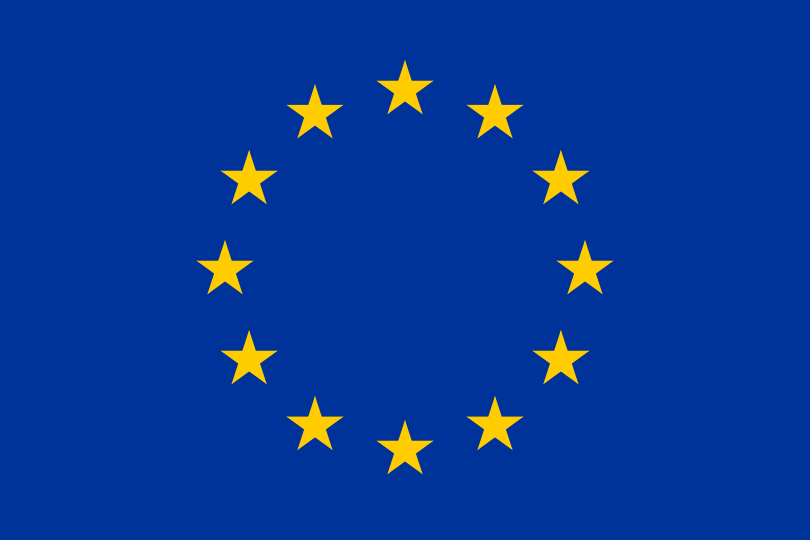
The flag of the EU
The flag of Europe officially represents both the EU and Europe as a whole. Its 12 stars have nothing to do with member or founding countries. They are a symbol of unity and completeness.

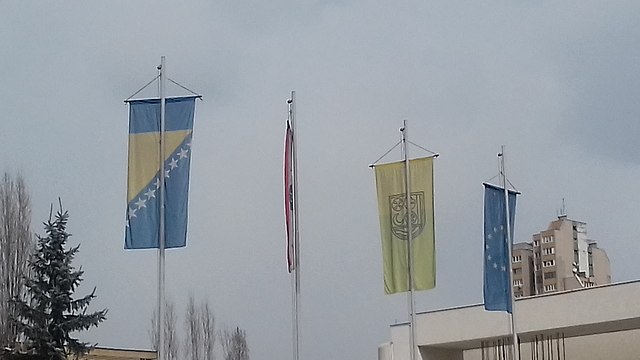
The EU flag is sometimes used by non- EU countries to express willigness to join or to show support for the European values. The first image shows the EU flag being placed in the Ukrainian parliament, the second the EU flag being flown in Bosnia.
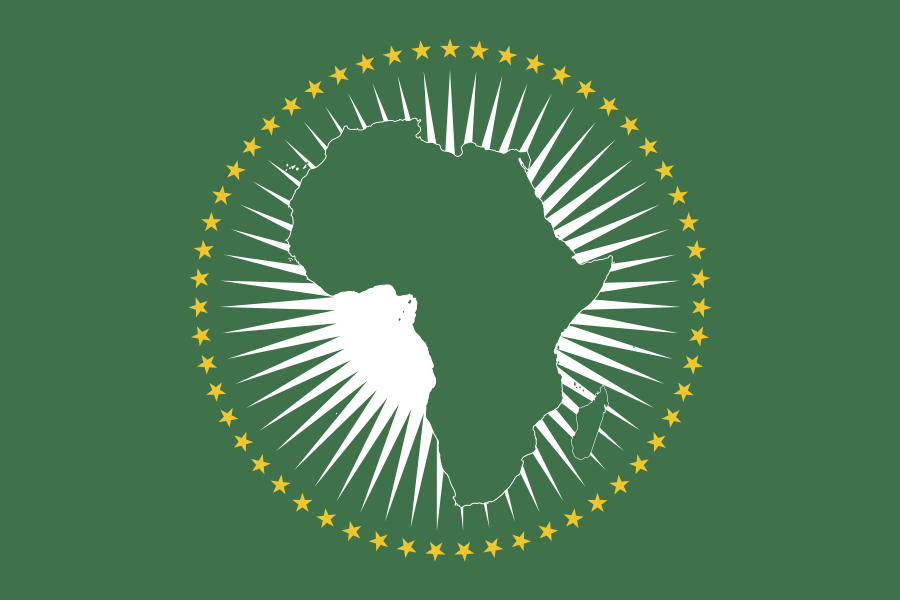
Flag of the African Union
The flag depicts the shape of Africa with 55 stars (one for each member) circled around it
.svg)
Korean Unification Flag
This flag was used at sport events to represent the Korean team which consisted of athletes from both North and South Korea. It is also sometimes used by people who advocate for unification.
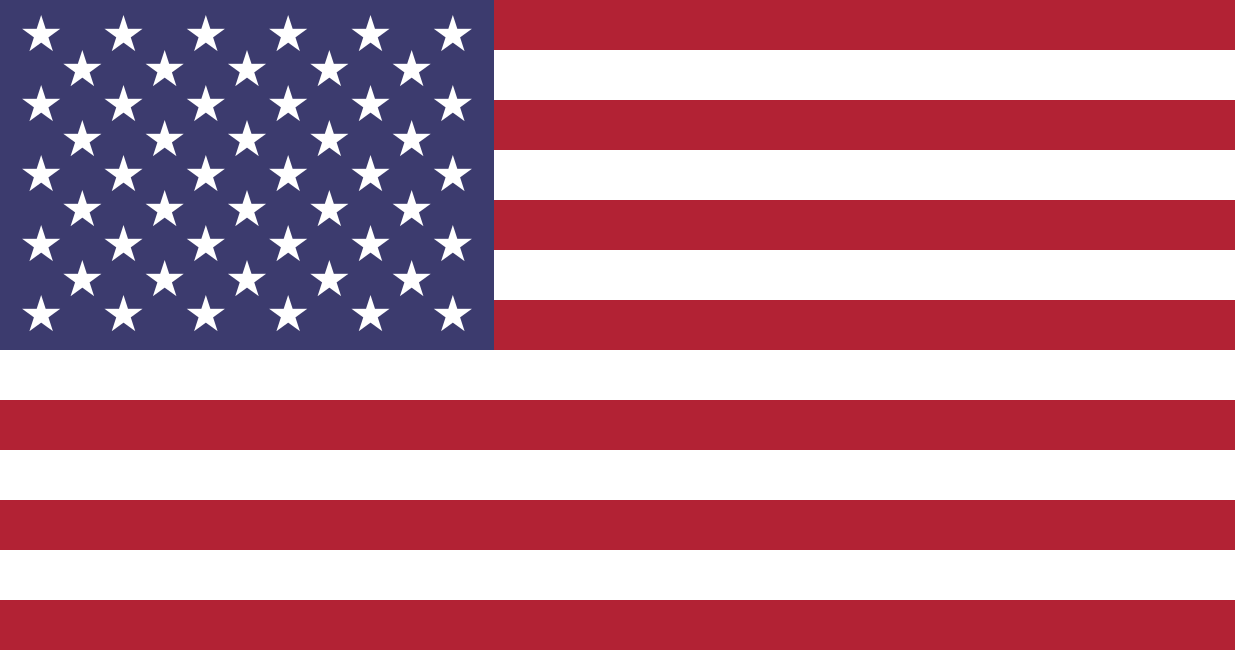
Flag of the United States of America
The flag of the USA is arguably the most recognizable one in the world and means a lot of things to lot of people, inside and outside of the country. Its 13 stripes represent the 13 founding states in 1776 and the 50 stars the 50 current member states. Blue stands for vigilance and justice, white for purity and innocence and red for hardiness and valor.
Flags of hate
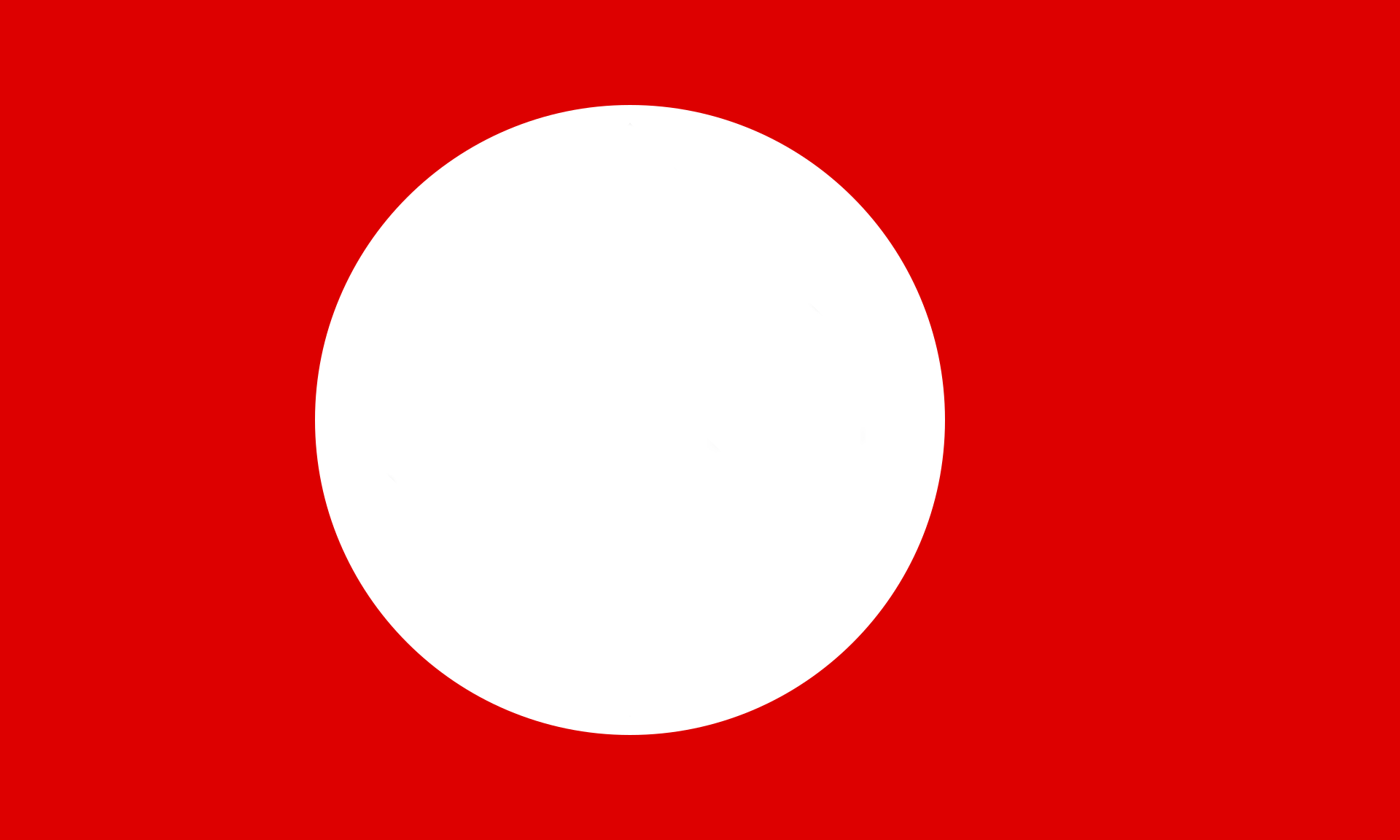
The flag of Nazi Germany
(without swastika for legal reasons)
There is probably no other flag loaded with as much hateful ideology as this one. The Nazis comited unimaginable crimes during their reign of terror from 1933-1945. The flag is banned in Germany and many other European countries, but is still used by some Neonazi groups in countries where it is not, for instance the USA.
.svg)
Flag of South Africa (1928-1994)
Before the political reforms in the 1990s, South Africa had a racist segregation system called "Apartheid" in place, which seperated white and black people in public spaces and heavily favored the white majority in nearly all aspects of life. Today this flag is used by white supremacists inside and outside of South Africa. A few years ago, a Cape Town court banned the public display of the flag as it constituted hate speech. The flag has the same colors as the Dutch "Prinsenvlag" and therefore pays tribute to the heritage of many of the white population. The flags arranged in the middle are (from left to right): The United Kingdom, the Orange Free State and the South African Republic. They are countries (along with the Netherlands of course) that played an important role in South Africa's history.
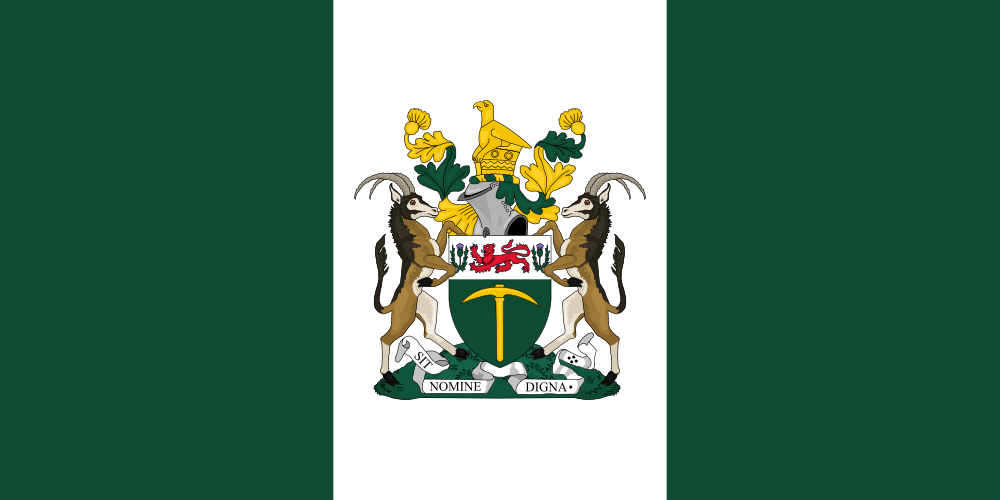
Flag of Rhodesia
Rhodesia was a short-lived country in southern Africa that existed from 1965-1979. Just like South Africa, a white minority population (that was an even tinier minority than in SA) oppressed the black people. The ethnic tensions led to a civil war that in the 70s that led to the collapse of Rhodesia which then became Zimbabwe. Today this flag is, much like the South African apartheid flag, used by racists, but in some rare cases also by people who citicize how the Zimbabwean government runs the country (--> hyperinflation) since Rhodesia was doing much better economically. If you want to learn more about Rhodesia's complex history, look into it; it's worth it.
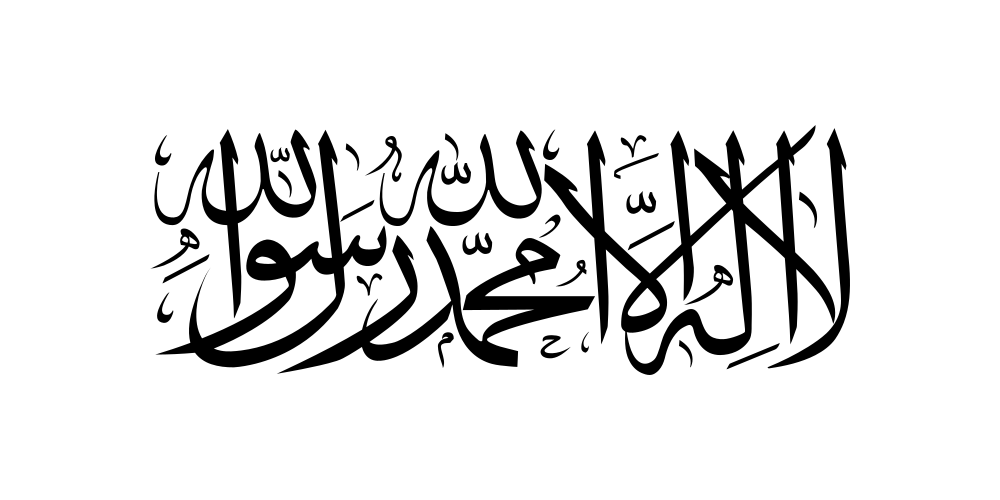
Flag of the Taliban
The terrorist group is known for all kinds of human rights violations, especially against women who suffer a lot since their takeover of Afghanistan in 2021.
Flags of resistance
.svg)
Flag of Ukraine
The flag of Ukraine has become a symbol for freedom and resistance after the country surprised the entire world with its will to fight against the Russian invasion. It is said that the flag shows a yellow wheat field with a blue sky above it.
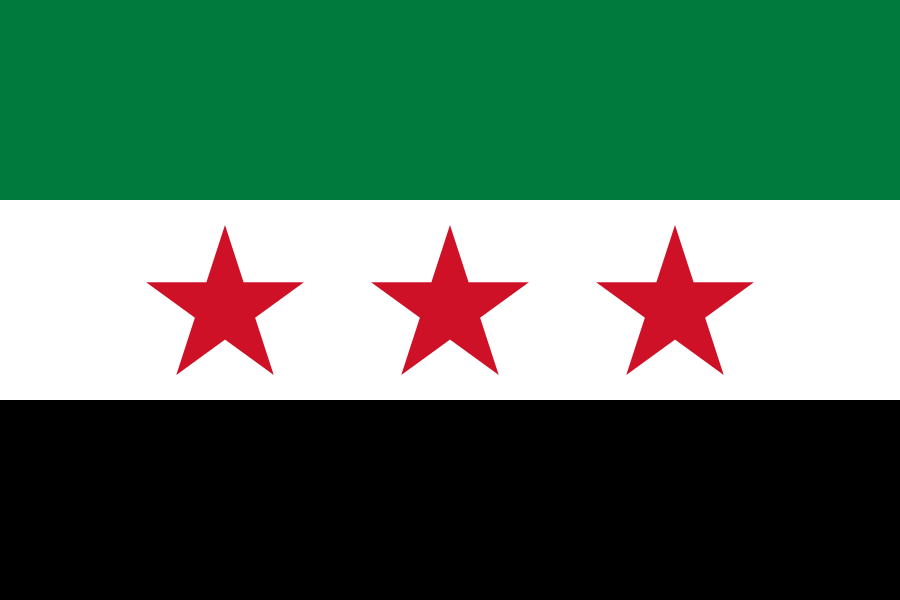
Flag of the Syrian opposition
This flag is being used by various groups that oppose or fight against the government of president Assad, such as the Syrian National Army or the Syrian interim government.
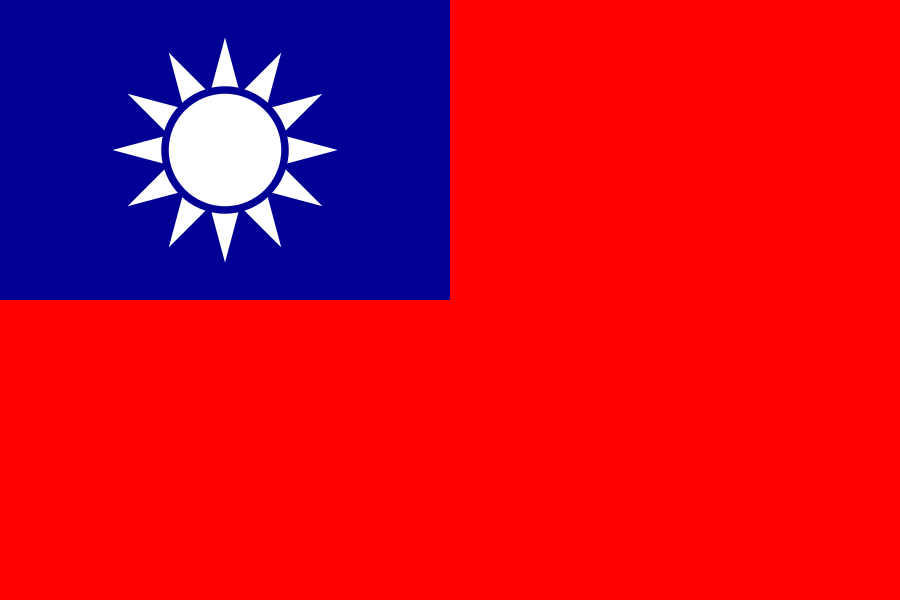
Flag of the Republic of China (Taiwan)
After the Republic of China lost the Chinese civil war, fled to the island of Taiwan and transitioned to a democratic system in the 80s, this flag became a symbol for resistance against the People's Republic of China and its Communist Party. The flag is supposed to depict "red earth and a white sun in the blue sky". In the past, there have been several proposals to change the flag into a flag that clearly resembles a Taiwanese identity instead of a Chinese one. I recommend looking reading more about the history of Taiwan, it's really interesting!
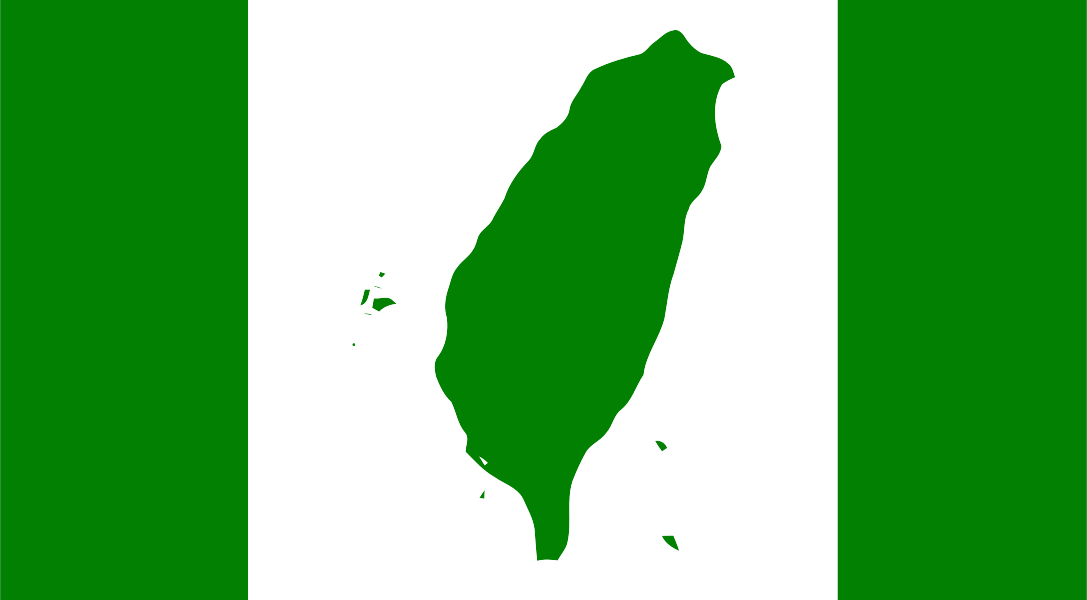
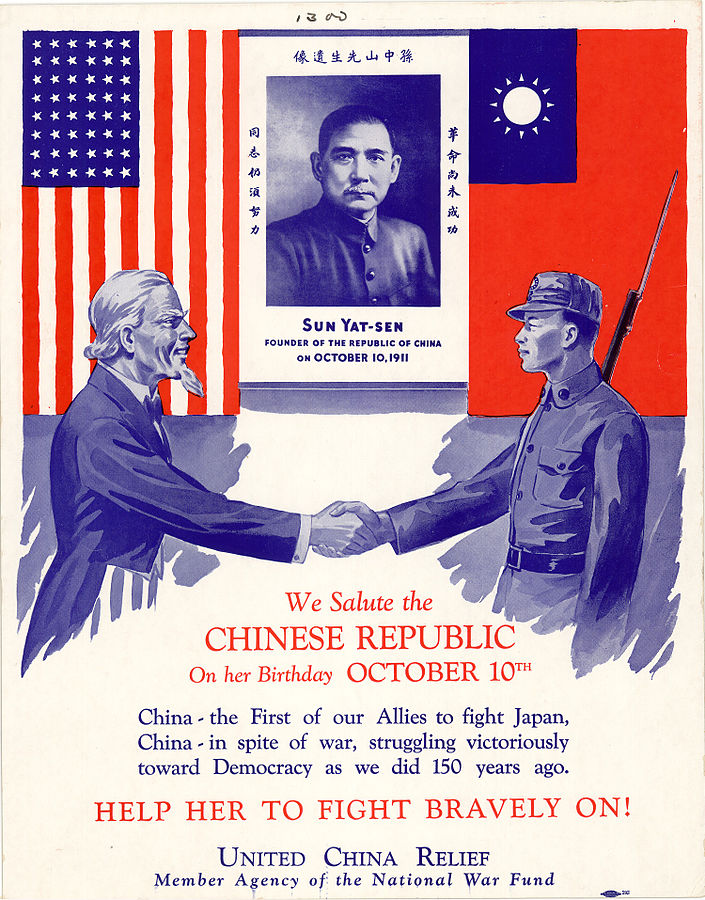
Left: Proposed Taiwan independence flag. Right: Usage of the flag in a propaganda poster.
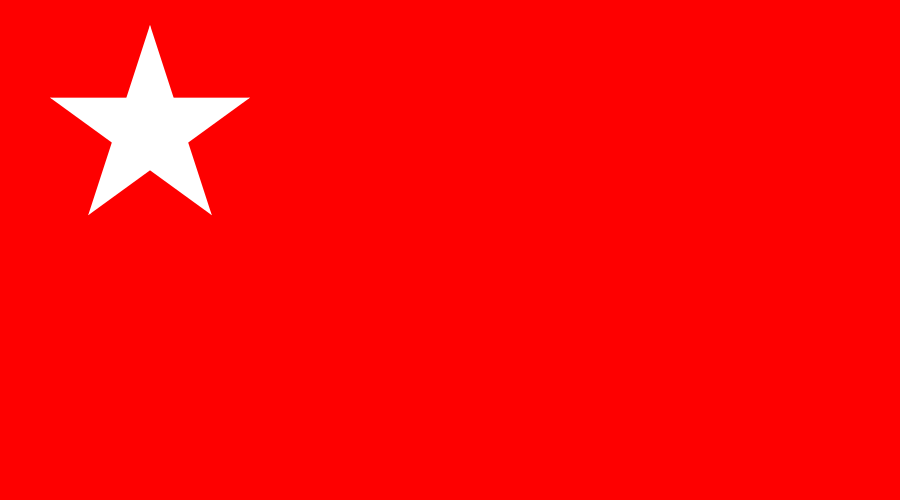
Flag of the People's Defense Force (Myanmar)
After the military coup in 2021, many in Myanmar started armed resistance against the new authoritarian governemnt. One of the largest is the People's Defense Force (PDF). Its flag which you see here is ery similar to the one of the opposition party "National League for Democracy"
Flags of Protest
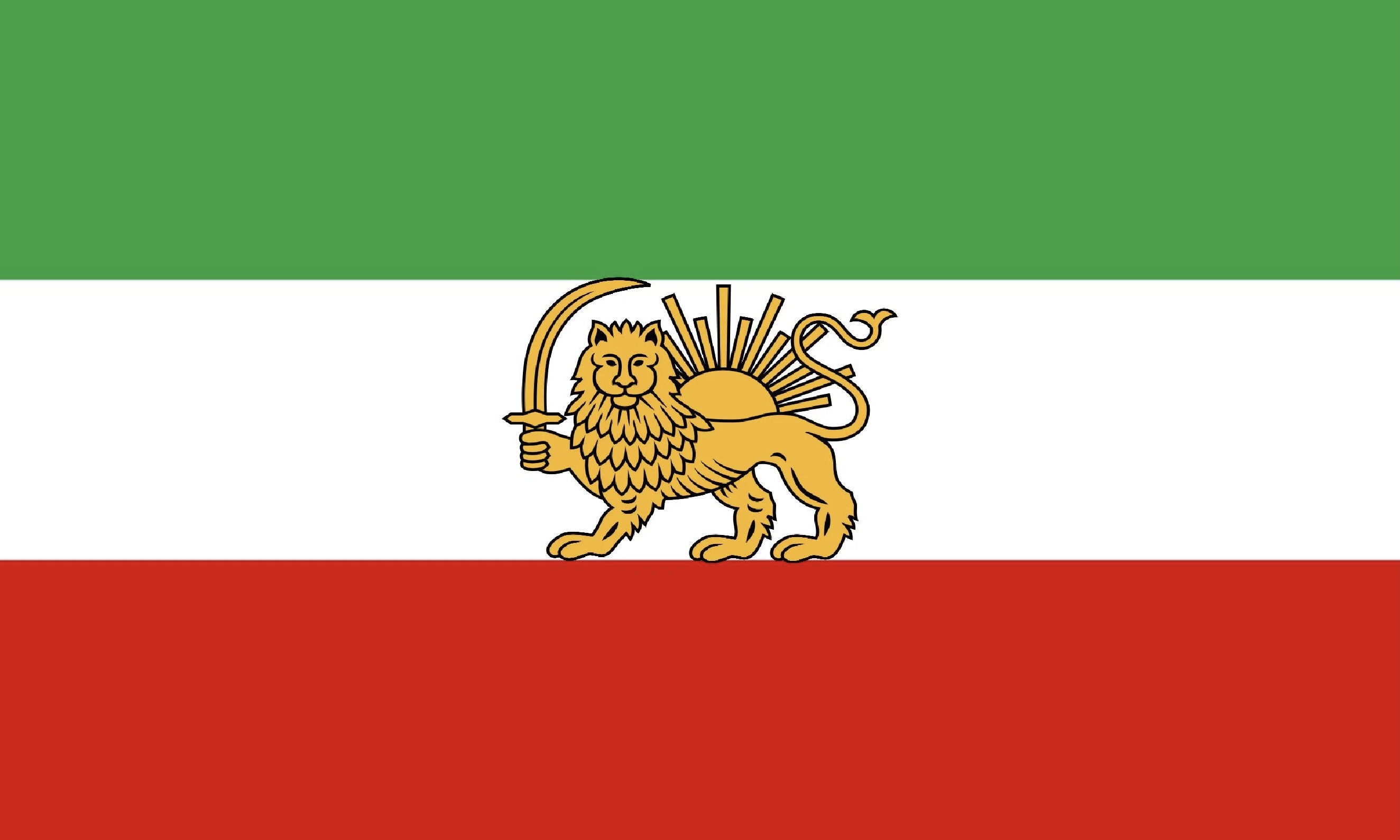
Flag of the Iranian protests
This flag is widely being used by people who protest against the Mullah regime in Iran. It was once the flag of Persia, before the Islamic revolution in 1979.
.svg)
Flag of the 2019 Hong Kong Protests
This flag was used during the 2019 Hong Kong mass protests that started as protests against an extradition law and later turned into protests against the Communist Party's influence on Hong Kong in general. It is similar to the actual flag of Hong Kong, but has a black background and the flower is wilted to symbolize the loss of freedom and democracy. Among this flag, there were two other widely used flags during these protests which you can see below.
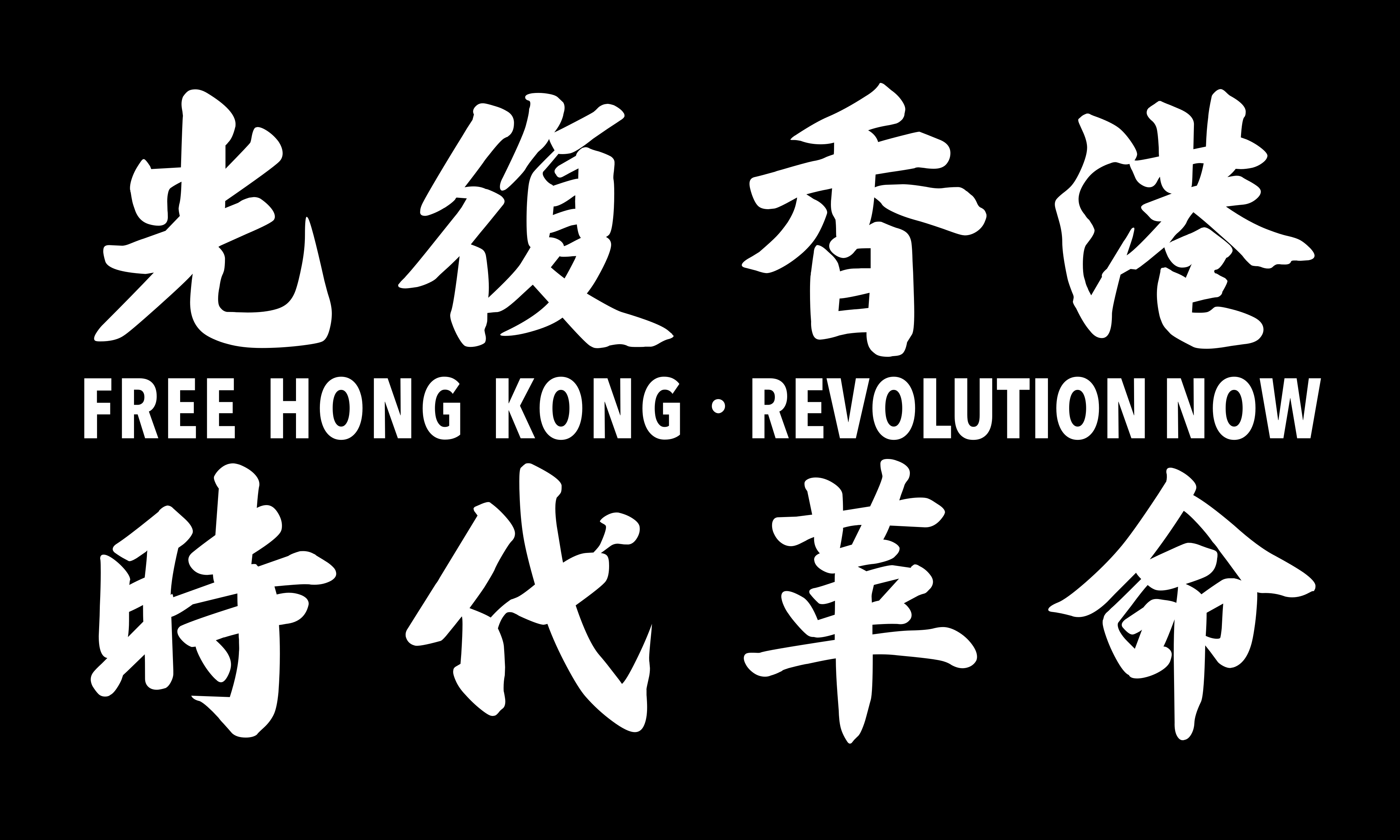
.svg)
Left: "Free Hong Kong Flag". Right: Old colonial flag of Hong Kong (1959-1997).
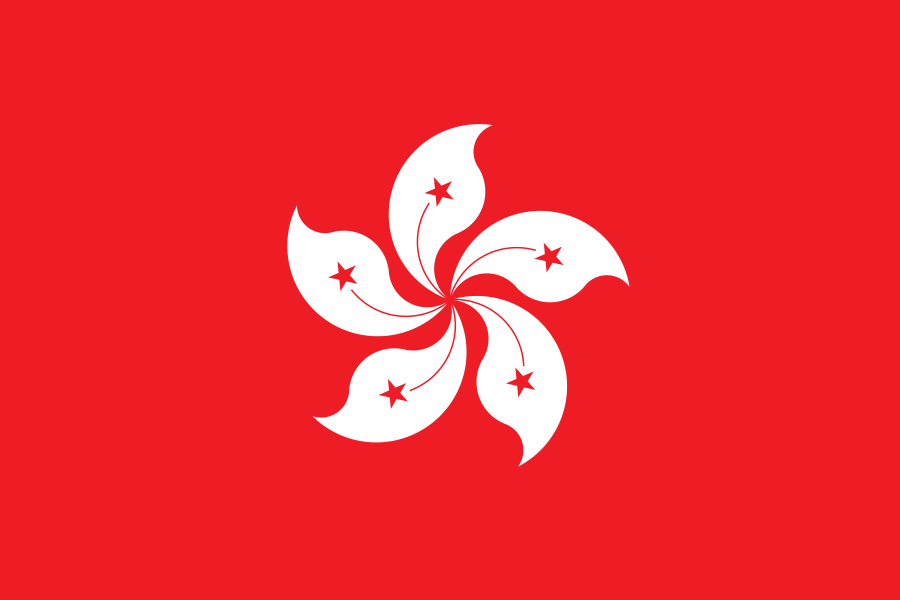
Official flag of Hong Kong which the protest flag alludes to

Flag of the Belarussian opposition
This flag is used by Belarussians who support democracy for their country. It was very prominent at the 2020 protests that erupted after the rigged election in that year.
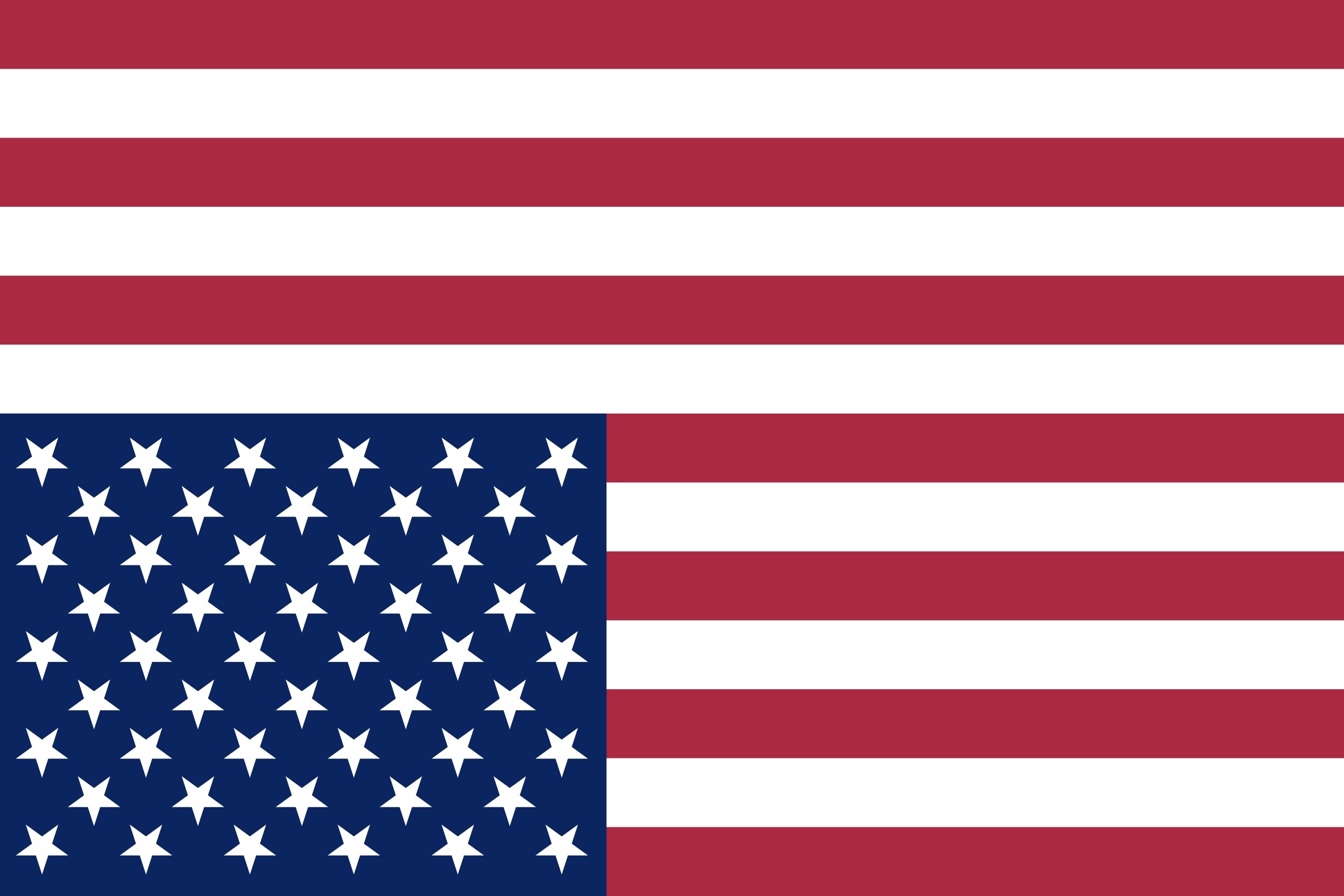
Upside down flag
Flying a flag upside down is a custom that was initially practiced on ships to signal distress, was then adpated by people in the US to protest or express discontent and has since spread to various other countries.
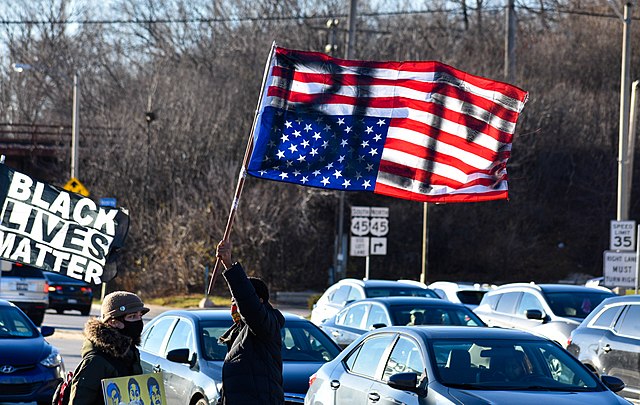

Left: Upside down US flag during a BLM protest in 2020. Right: Upside down Dutch flag as part of the "Boerenprotest" in 2022.
Flags of empire
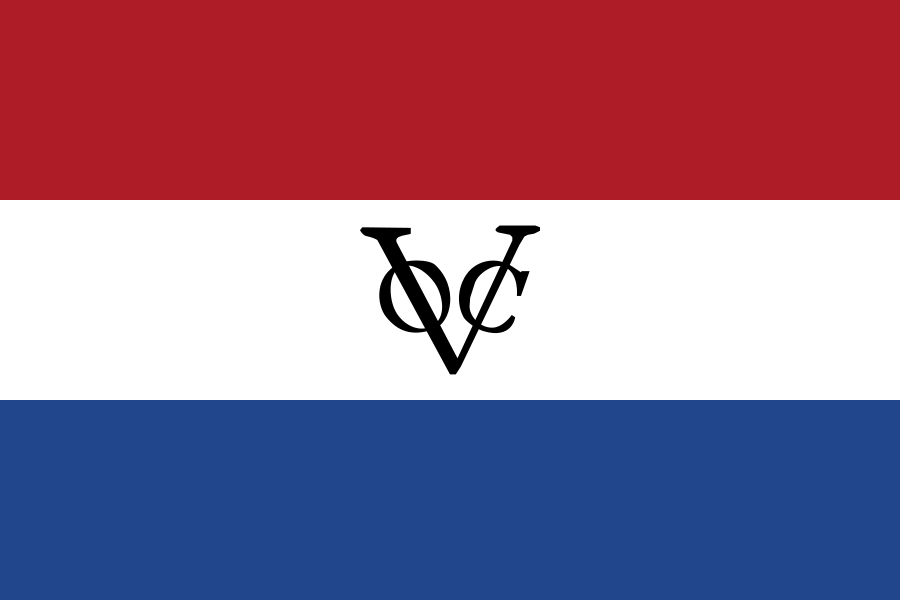
Flag of the Dutch East India Company
The letters stand for "Vereenigde Oostindische Compagnie"
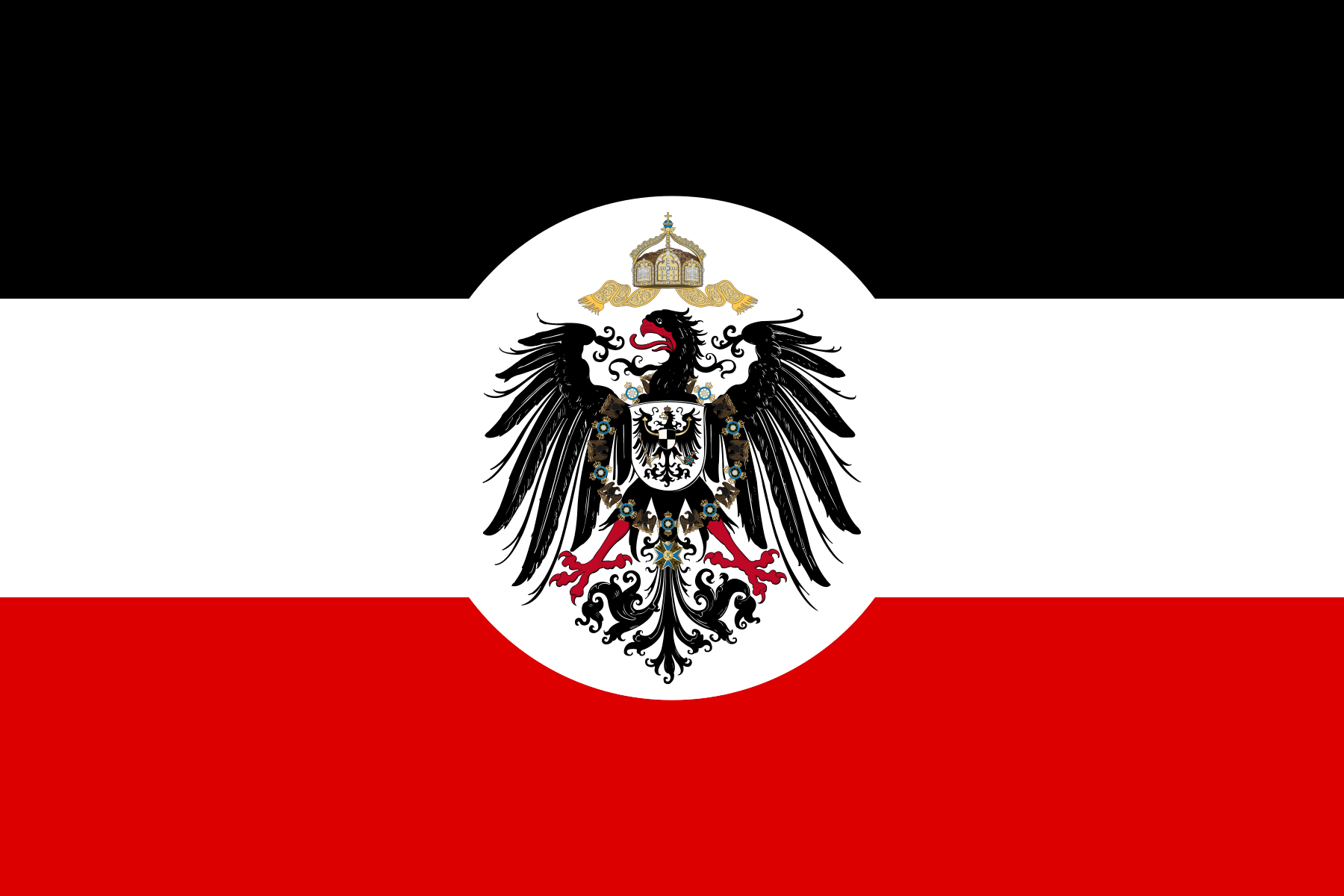
Colonial flag of Germany
.svg)
Flag of the British East India Company
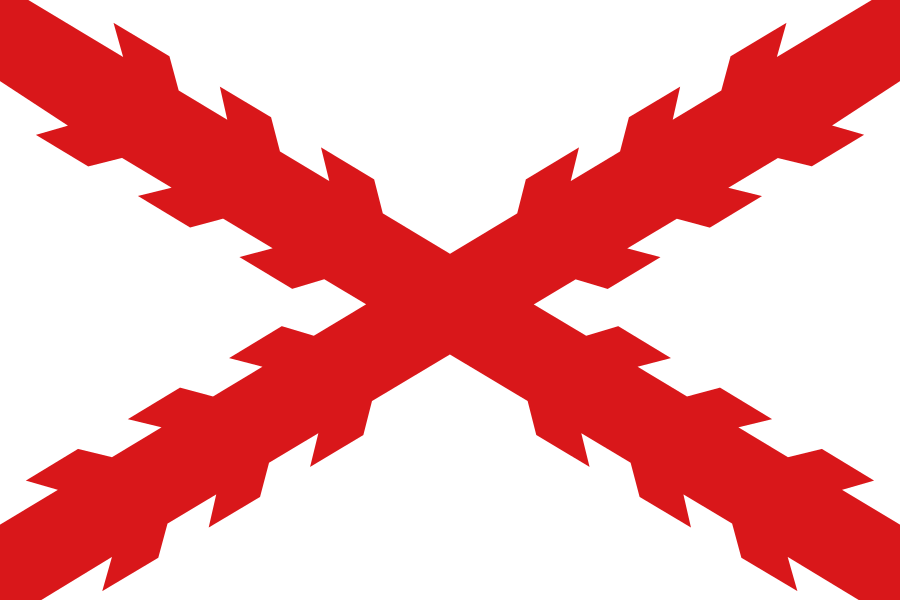
Cross of Burgundy, colonial flag of Spain
Flags of freedom
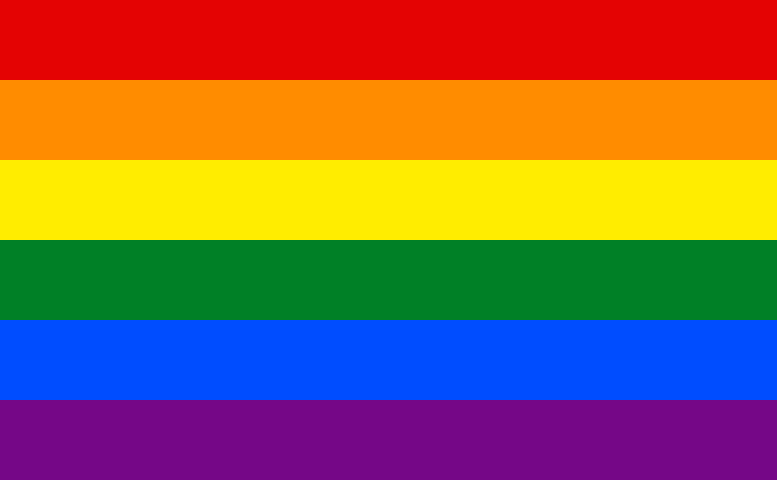
Pride flag
Used by members of the LGBT community and people who support it. The flag is a symbol for LGBT rights and the struggle for them. The original flag from 1978 had an additional pink stripe at the top. Somtimes, national flags are combined with the pride flag by replacing some elements with the rainbow stripes.
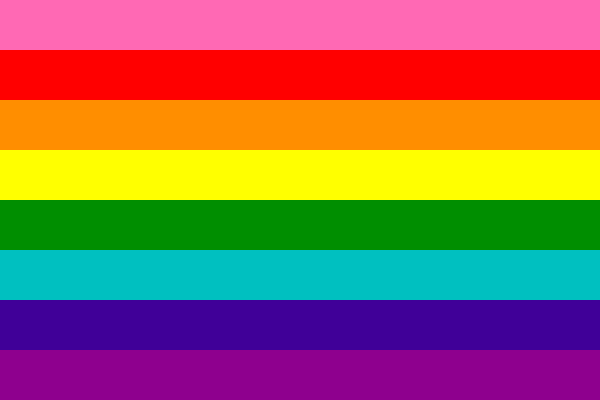
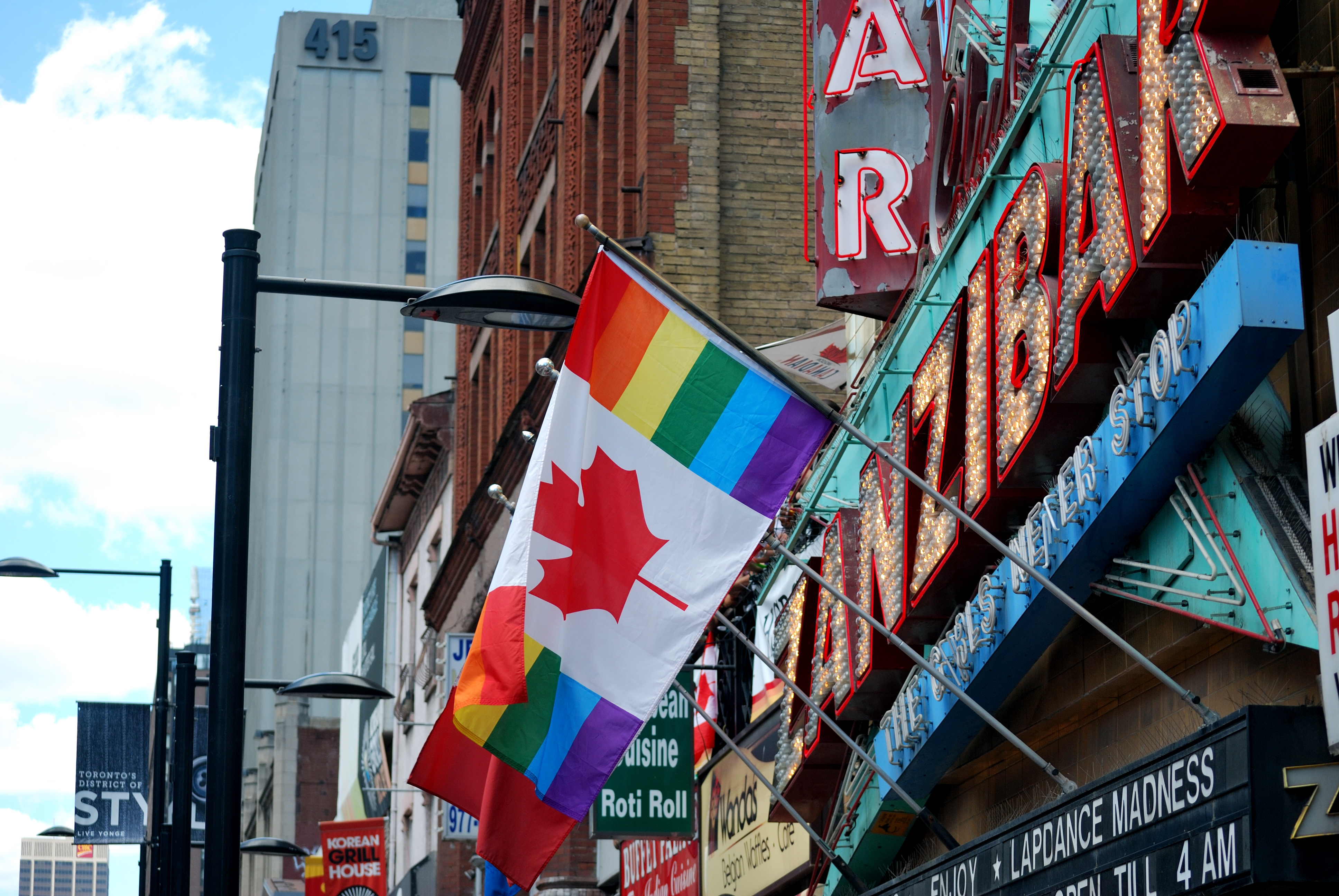
The first pride flag with a pink stripe and a Canadian pride flag version
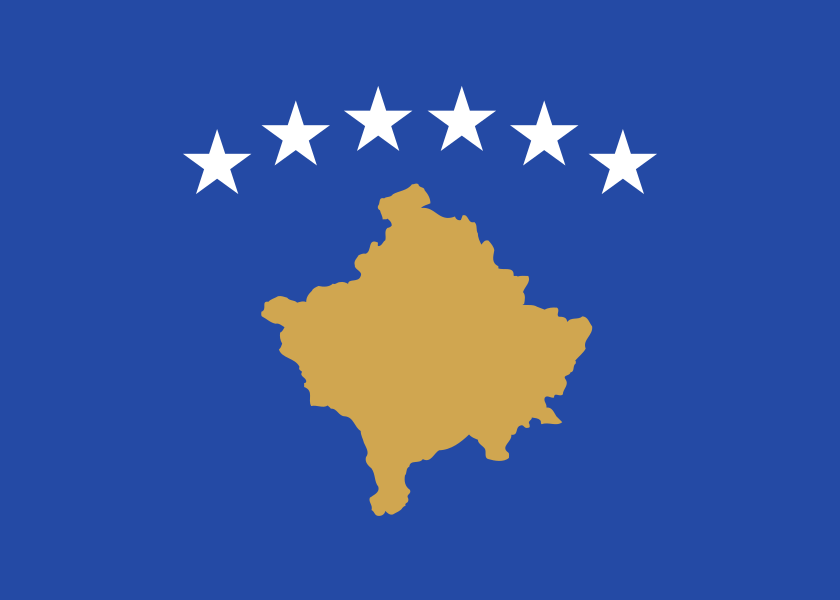
Flag of Kosovo
Kosovo adopted this flag in 2008 following its declaration of independence from Serbia after a war and NATO interventions. It depicts a golden shape of the country and 4 white stars which represent the 4 largest ethnic groups living in it.
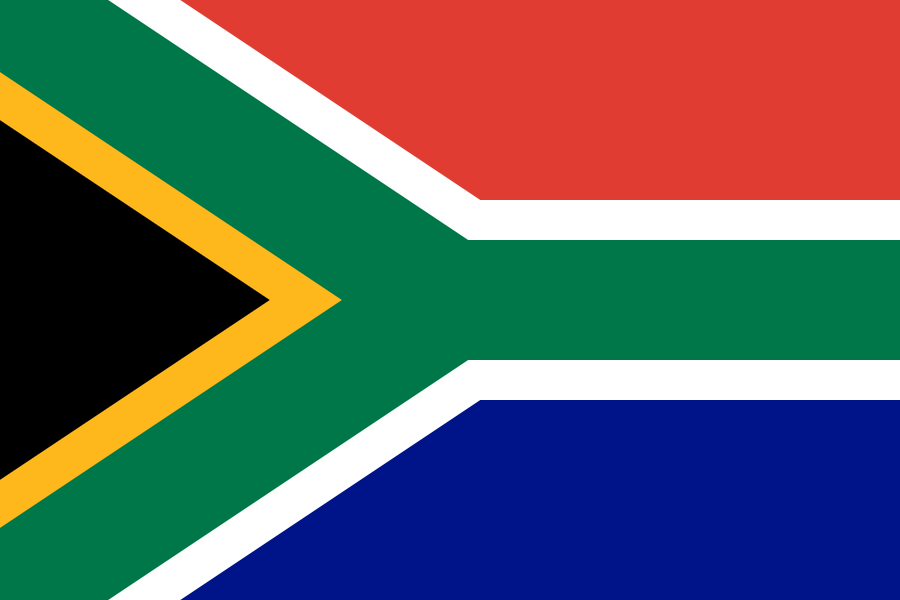
Flag of South Africa (1994-today)
After South Africa became a democracy and apartheid was abolished in 1994, this flag was adopted. It conveys a strong message about the country's history and the black population's struggle for equality because it shows the colors of the African National Congress (Black, yellow and green; the ANC is Nelson Mandela's party that represented the black people) carving its way through the Dutch flag.
.svg)
Flag of Thailand
Thailand's flag is not a product of some struggle for independence or equality. Instead, it represents freedom in a different way: Thailand is the only country in Southeast Asia that never got colonized. This was because the territories to the West of it (Myanmar, India) were occupied by the British and the territories East from it by the French and both wanted to preserve Thailand as a neutral buffer zone. Many claim that Thailand was de facto occupied by Japan in WWII, but it was neither formally declared a colony, nor did Japan have any substantial control over the government, although they forced Thailand to support Japan's war effort. Still, it was more not a colony than it was one.
Flags of the USA
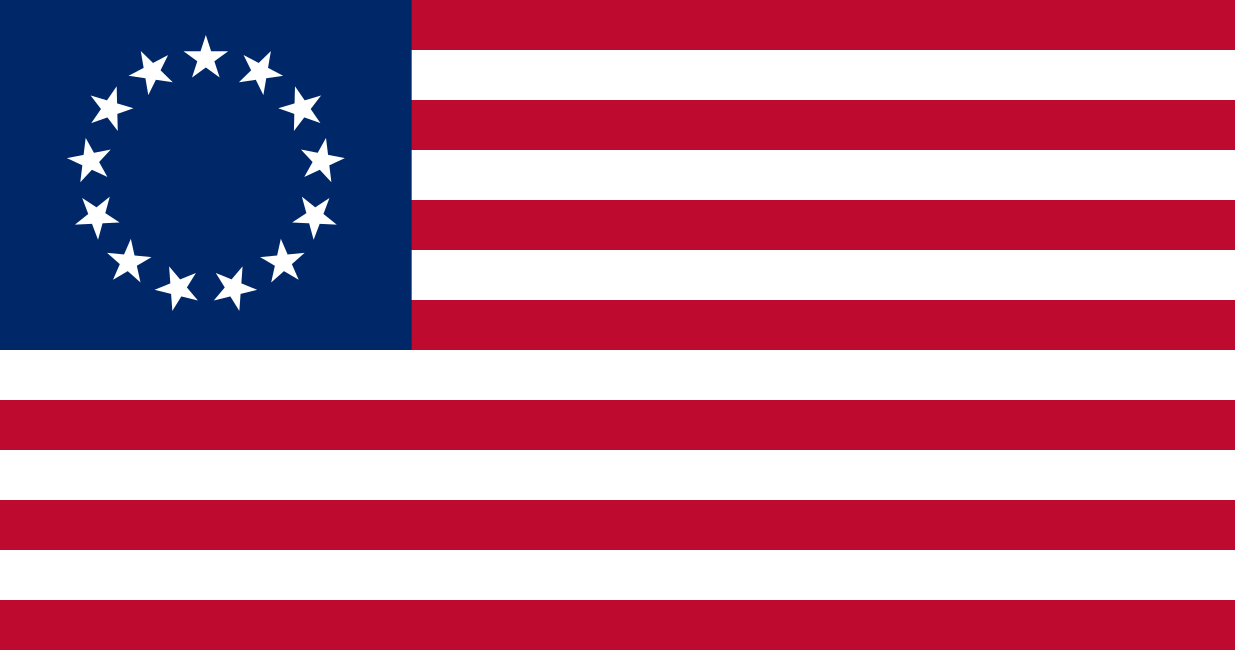
"Betsy Ross Flag"
This was the first official flag of the USA which had 13 stars arranged in a circle in the blue field. Today, the flag is used mostly by rather conservative to express support for the founding values of the USA, its constitution, the second ammendment or to protest.
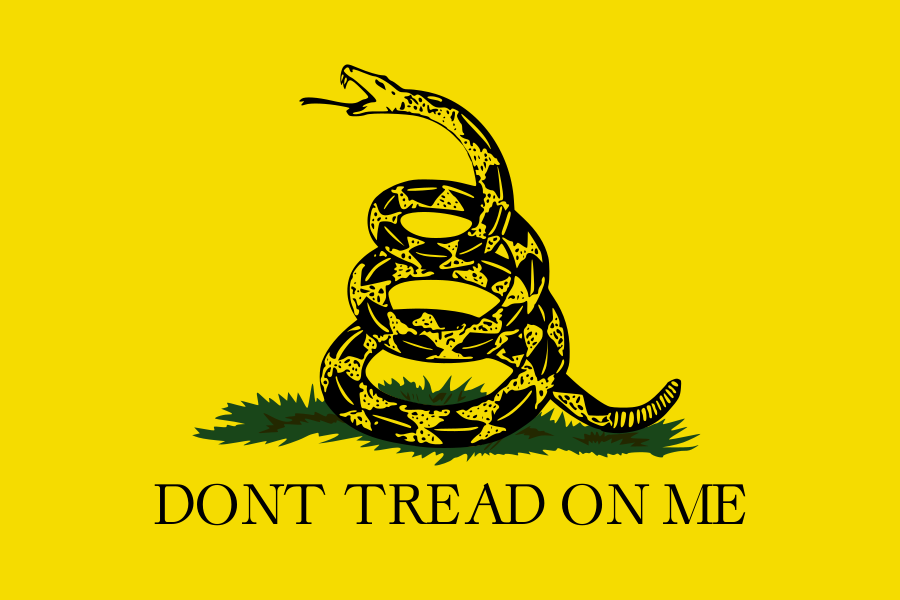
"Gadsen Flag"
The "Gadsen Flag" was created during the War of Independence. Today, it is a symbol of neoliberals, conservatives and especially people in favor of the second ammendment and those critical of the federal government when they feel it "treads" on them.
.svg)
"Thin Blue Line"
The Thin Blue Line flag shows support for law enforcement. The blue line represents law enforcement forming a line between order and anarchy. There are also other versions of "Thin Line" flags with different colors, such as red for firefighters or green for the military.
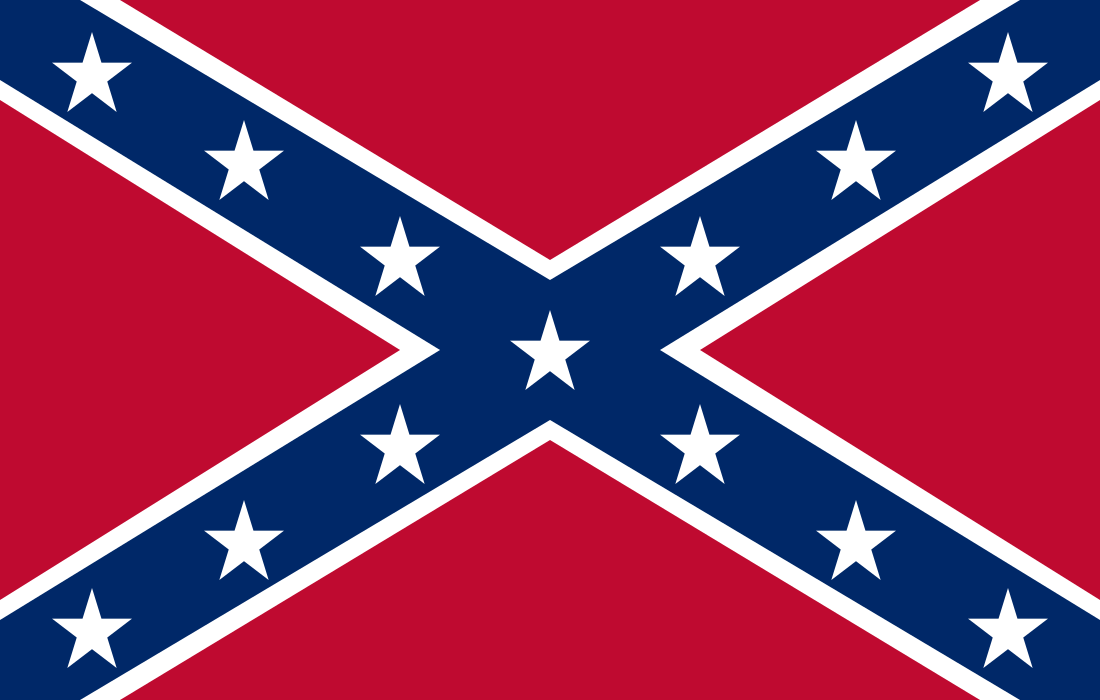
The Confederate Battle Flag
Last but not least, there is of course also the "Confederate flag" as it is commonly called. Although all the flags I presented to you in this section are somewhat controversial as they are sometimes used by people with questionable intentions (let's put it that way), this one is by far the most controversial one of them. The reason is that this flag was used by the Confederate States of America, which were in favor of slavery, in the American civil war. Therefore, it is a common symbol of white supremacists although some people claim they use it to represent "Southern heritage". Also btw, many people think that this flag was the state flag of the Confederacy. This is not true. It was featured in the upper left corner on one of their flags, but the actual flag was only used as a battle flag.
.svg)
.svg)
Most prominent actual state flag of the Confederacy and one of the versions that had the battle flag on it.

.jpg)
Gadsen flag, Betsy Ross flag and Thin Blue Line flag used at the January 6th insurrection.
Flags of countries that don't exist anymore
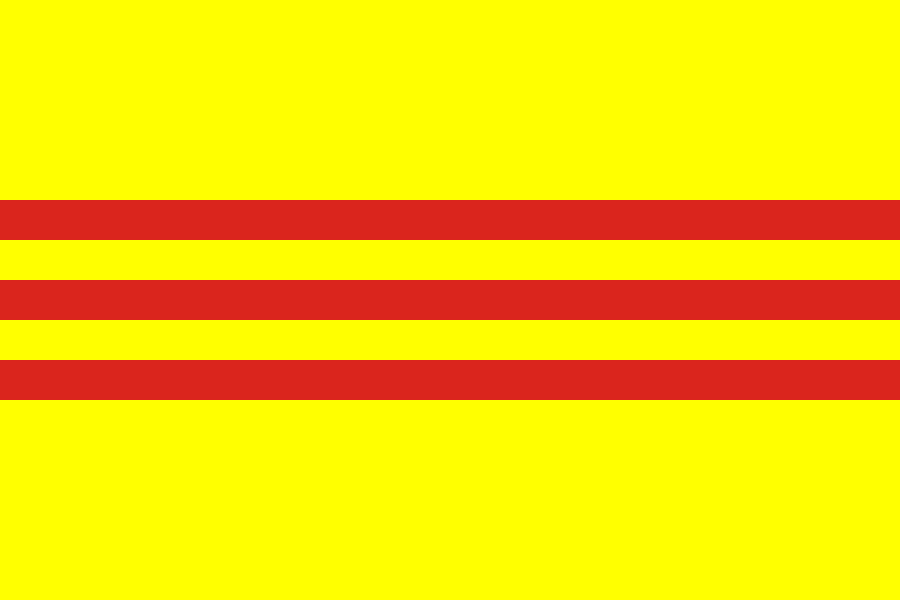
Flag of South Vietnam
South Vietnam was the part of Vietnam under US control after WWII that later was invaded by the socialist North. It ceased to exist after it and the US lost the Vietnam war.
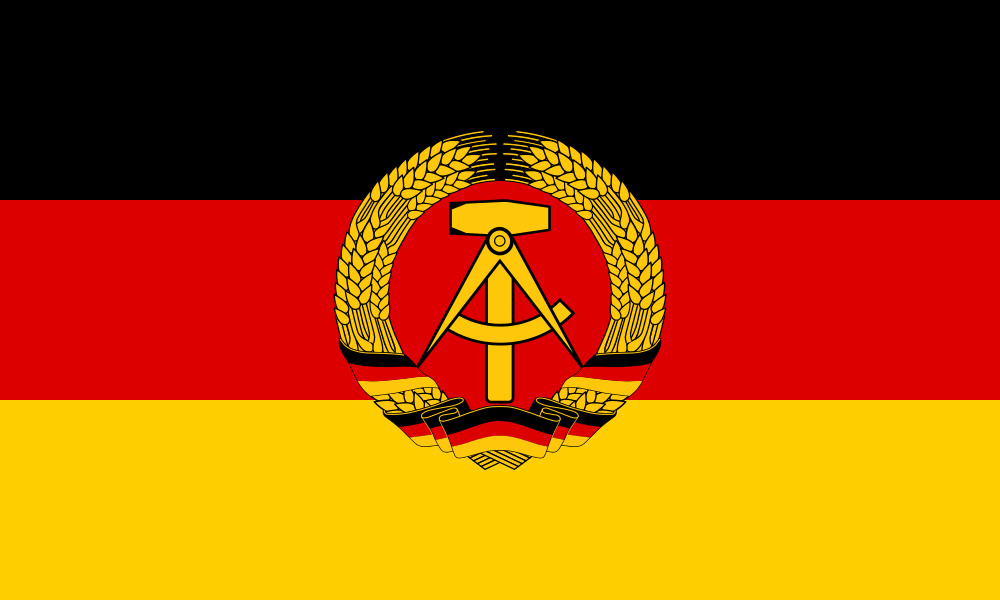
Flag of East Germany
The Soviet occupation zone in Germany after WWII was turned into the "German Democratic Republic" in 1949. After the fall of the Berlin Wall in 1989, the territory became part of the Federal Republic of Germany.
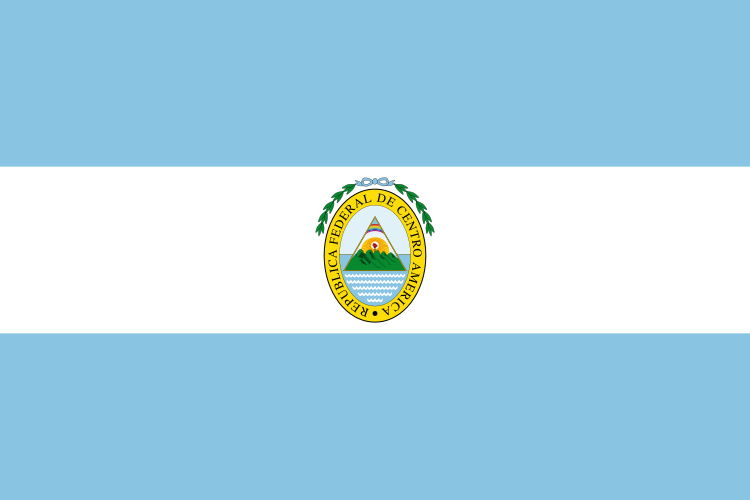
Flag of the Federal Republic of Central America
The Federal Republic of Central America existed from 1823–1841 and comprised the territories of modern-day Guatemala, Honduras, El Salvador, Nicaragua and Costa Rica. The blue stripes are said to represent the ocean to both sides of Central America.
.svg)
Trade flag of Austria-Hungary
Austria-Hungary did not have an actual state flag. This flag is often treated as one, but in realty it was the trade flag of the double monarchy. Still, it is the closest thing to a state flag there was for Austria-Hungary and everyone will know that it stands for it.
Share this article